The Order You Eat May Matter
By Editorial Staff
Could a little healthy fat before carbs help tame a blood sugar spike?
When it comes to controlling blood sugar, most advice focuses on what you eat: fewer refined carbohydrates, more fiber, healthier fats, and sensible portions. But researchers are increasingly interested in another surprisingly simple question: Does the order in which you eat those foods matter?
There is a logical reason it might. Carbohydrates (particularly sugar and refined starches) can move through the digestive system quickly, sending glucose into the bloodstream and causing blood sugar to rise. Eating fat, protein or fiber before carbohydrates may slow that process. This concept is sometimes called a "preload": consuming one type of food shortly before another to change the body's response to the meal.
A new study published in the American Diabetes Association journal Diabetes offers an intriguing look at how that might work. Researchers gave mice olive oil either before or after glucose and compared the results with mice given water before glucose. When olive oil came first, the animals' stomachs emptied more slowly and their early rise in blood sugar was reduced. The effect also occurred in diabetic mice.
Your Body's Own GLP-1 Response
The experiment uncovered something particularly interesting in an era of GLP-1 medications such as Ozempic and Wegovy. Olive oil before glucose increased several digestive hormones, including GLP-1 – a hormone your body naturally releases after eating. Among its effects, it helps regulate blood sugar and can slow the rate at which food leaves the stomach.
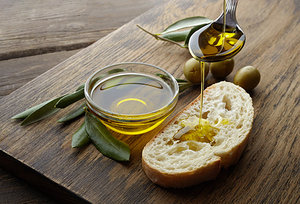 But GLP-1 wasn't acting alone. The researchers found evidence that glucagon and GLP-1 signaling could partly compensate for one another, while communication through the vagus nerve (the major nerve connecting the brain with the digestive system) also contributed. In other words, eating fat first appeared to trigger a coordinated digestive response that changed how quickly the carbohydrate reached the bloodstream.
That's an intriguing biological explanation for something that is remarkably easy to understand at the dinner table: The same foods eaten in a different sequence could potentially produce a different blood sugar response.
What Does "Fat First" Look Like?
A practical interpretation is to think about how a meal is assembled. Instead of beginning dinner with bread, pasta or another carbohydrate-heavy food, you might start with a salad dressed with olive oil, vegetables with a healthy-fat dressing, or another food combining healthy fat and fiber. Then move on to the carbohydrate portion of the meal.
Olive oil brings advantages beyond this particular experiment. It's a staple of Mediterranean-style eating and can replace less desirable sources of fat in the diet. The point isn't to add large quantities of fat or extra calories simply to manipulate blood sugar. It's to consider whether healthy foods you're already eating might work differently depending on when you eat them.


